The Bead Sculpture of the Macedonian Jewry Museum
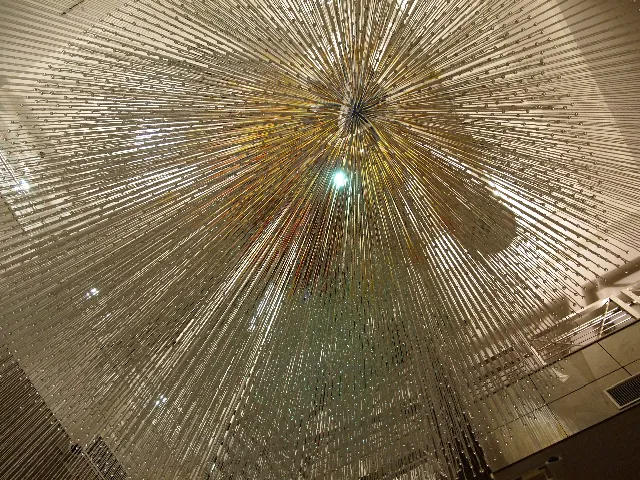
A sculpture hung from 7,192 strings of beads, one string for each Jew who lived in Macedonia before the Holocaust. Designed with a digital tool and built by hand in under six months.
The idea
The sculpture represents the lost Jewish community of Macedonia. Each string is a Jew who lived there before the Holocaust: 7,192 strings, exactly the number of Jews. Almost the entire community was murdered in the Holocaust.
The idea came from the late Eddie Jacobs of BJA (Berenbaum Jacobs Associates), for the museum commemorating the Jews of Macedonia in Skopje, the capital. The sculpture was to be made of beads. Breaking it down into design and production was our work at UMAMY. The sculpture, and in fact the entire museum, was produced by Eddie Jacobs, in China and in Macedonia.
In numbers
- 4 metres in diameter, 8 metres high
- 7,192 strings, one for each Jew, each about 8 metres long
- About 60 km of string
- Over 18 million beads, each about 3 mm
- Under 6 months from the project’s arrival to full installation, in 2011
From model to strings
To turn a 3D model into this many strings and beads, we built a chain of tools in which every step feeds the next.
1. The model. We started from a three-dimensional model of the sculpture.
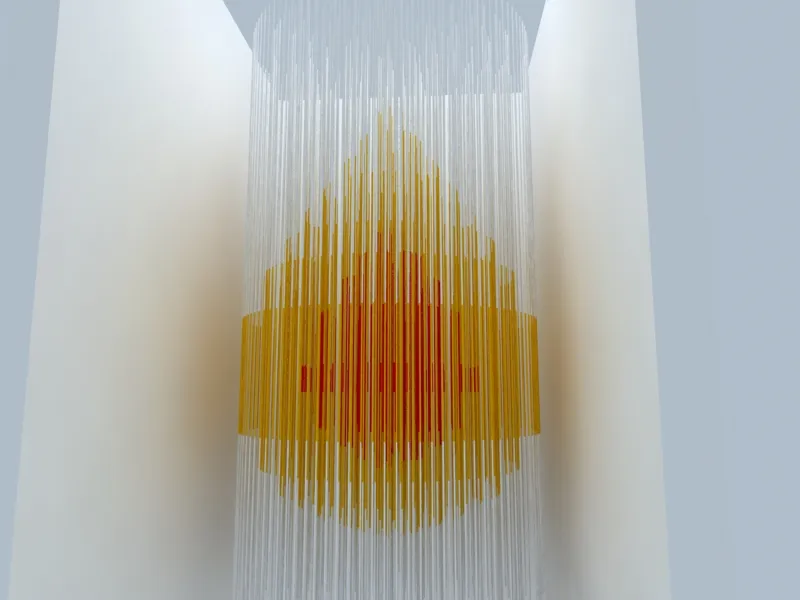
2. Unrolling into cylinders. We created a tool that unrolled the 3D model into cylinders, from which images were generated.
3. From image to spreadsheet. We passed the images through another dedicated tool that turned them into Excel files. Each file was printed at 1:1, so the beads could be threaded directly against it.
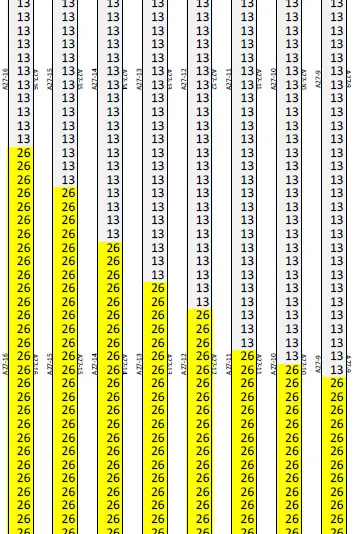
4. Threading by hand. The beads were threaded by hand, string after string, and the finished strings were packed in bags.

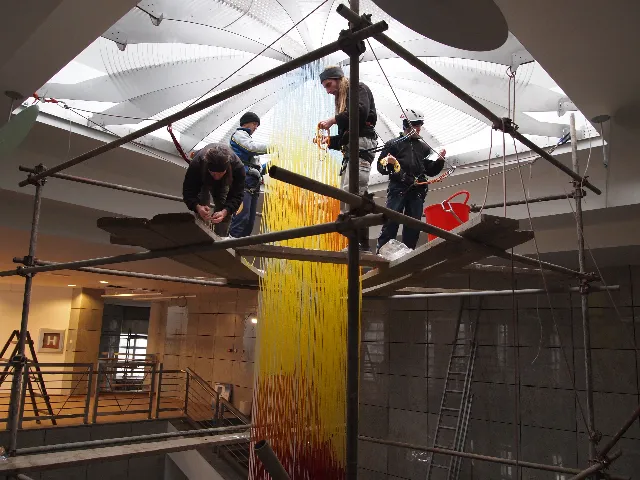
5. Installation. The strings were hung in the museum’s atrium, from scaffolding, until the cylinder took shape.
The result
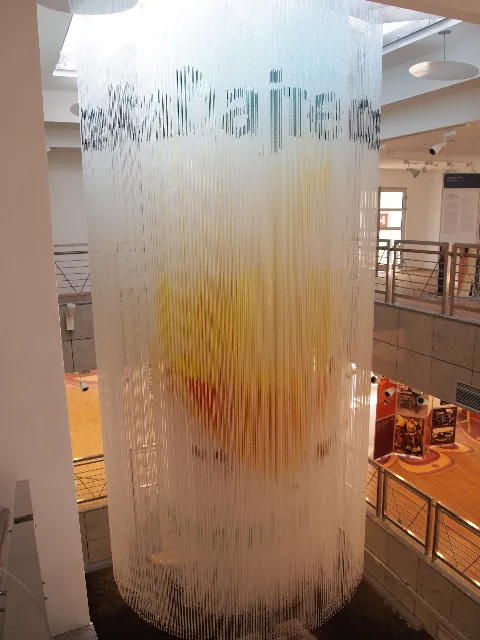
Up close it is thousands of separate strings, each one a single Jew, and from a distance they read as one body: a whole community, hanging in the museum.
The lobby
After the sculpture we joined the design team of the museum as a whole, and designed the lobby floor.