On valleys and new paths
Part of what makes it hard for us to innovate comes from the illusion that we have already reached the best result. What training a language model can teach us about leaving the valley.
Part of what makes it hard for us to innovate comes from the illusion that we have already reached the best result. After trying all kinds of options, what we have now, even if it is far from perfect, starts to look like the maximum that is possible.
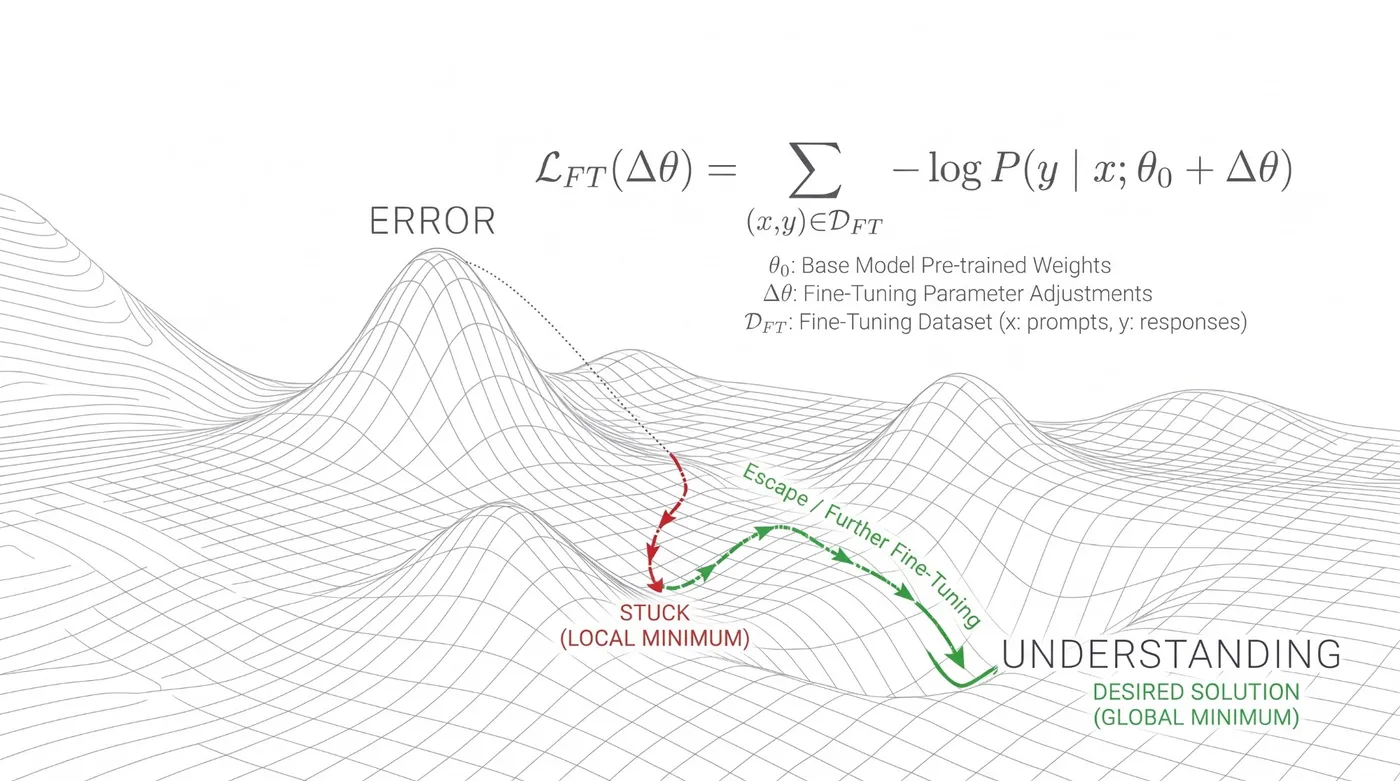
This reminds me a great deal of a “local minimum” in which an AI model (an LLM) can get stuck during training. When you are deep inside the valley, every other direction looks like a steep climb and pointless effort, and where you are now feels like the best option around.
But to truly improve, there is no choice but to leave the valley. That takes effort, and perhaps even a willingness to be “worse” for a while: to climb up, take a risk and explore new terrain, only to discover, beyond the ridge, breakthrough solutions. Or, in LLM terms: far deeper valleys.